On this page
- When should a small store write its holiday return policy?
- What should a gift receipt let a customer do?
- How long should a holiday return window be?
- Should a holiday return get a refund, an exchange or store credit?
- What items can a store refuse to take back?
- Where should a store post its return policy?
- How do you train seasonal staff on returns?
- How does a return work in MazalPOS?
- Is there a holiday return policy I can copy?
Key takeaways
- A holiday return policy needs four things in writing: a gift receipt rule, a return window, what the customer gets back, and the items that cannot come back.
- The FTC notes that many stores stop taking returns after a deadline like 30 or 90 days, so pick one date for the holidays and print it.
- Store credit costs you less than a refund and keeps the customer, according to the FTC.
- Every refund in MazalPOS needs a manager to say yes, and a commission earned on the sale comes back off the seller.
- MazalPOS is priced per location, $99 or $169 a month, with no charge for each employee.
A good holiday return policy for a small store answers four questions in writing before December: who can return a gift, how long they have, what they get back (refund, exchange or store credit), and which items cannot be returned. Write it down, post it at the counter and teach it to every seasonal employee, so a customer gets the same answer on December 20 as on January 10.
When should a small store write its holiday return policy?
Write your holiday return policy before the rush, in early November, so it is printed and trained before the first gift is sold. Returns pile up in the weeks after Christmas, and they arrive at a counter run by your newest people. The National Retail Federation, working with Happy Returns, projects that total returns for the retail industry will reach $849.9 billion in 2025. You are not a national chain, but the same thing happens on a smaller scale: a duplicate candle, a necklace in the wrong length, a charger that does not fit the phone. A policy that is clear on paper turns each of those into a two minute conversation instead of an argument.
The law lets you decide most of it. The California Attorney General puts it plainly: when a store clearly displays a limited or no-refund policy, refunds and exchanges are not required by law. That is one state's guidance, and the rules differ across the country, so check your own state before you print anything. What every state rewards is a policy that is written, specific and consistent.
What should a gift receipt let a customer do?
A gift receipt should let the person who got the gift return or exchange it without seeing the price, within the window you choose. A gift receipt proves a purchase without showing the price, so the person who got the gift can bring it back without knowing what it cost. Decide up front whether you offer them and what they allow. Two common rules:
- Exchange or store credit only on a gift receipt. The recipient gets the value of the item, never cash. This is the safest rule, because you do not know what the buyer paid or how.
- Refund to the buyer only. The person who paid, with the original payment card or receipt, gets the money back. Anyone else gets credit.
Whichever you choose, say it in one sentence on the sign and tell the cashier to offer a gift receipt at every holiday sale. Handing the gift receipt over at the register makes the rule clear before anyone has to ask.
How long should a holiday return window be?
A holiday return window should run long enough that a gift bought in November can still come back in January, such as through mid January. The FTC notes that many stores will not take returns or exchanges after a certain time, like 30 or 90 days. For the holidays you can stretch the window so that a gift bought in November can still come back in January. That is your choice, and it is the one most customers ask about.
Pick an end date, not a number of days, and put it on the sign. "Items bought from November 1 can be returned until January 15" is easy for a cashier to apply and hard for anyone to dispute. Keep the window short enough that returned items can still be restocked and sold before the season ends.
Should a holiday return get a refund, an exchange or store credit?
A holiday return can get a refund, an exchange or store credit, and many small stores give store credit or an exchange for gifts. You decide what the customer gets, and the choice has a real cost. The FTC tells shoppers that sellers are often more willing to offer a store credit than a refund, because it is less expensive for them and keeps the customer. That is the logic behind many holiday policies:
- Refund to the original payment, for the buyer with a receipt, inside the window.
- Exchange for another item of the same value, with the difference paid or credited.
- Store credit for gift receipts, items past the window or items without a receipt. See the glossary on store credit and refunds.
Write down the order of preference, so the cashier does not have to guess. For example: refund to the original card within 30 days with a receipt, store credit after that and for gift receipts, no cash for gifts.
What items can a store refuse to take back?
A store can refuse items it lists as final, such as opened cosmetics, earrings, underwear, custom orders and clearance, if the policy says so. Every store has items it cannot take back: opened cosmetics, earrings, underwear, custom orders, clearance. List them. California shows why it matters. Under Civil Code section 1723, a retailer whose policy is less than a full cash or credit refund, or an equal exchange, for at least seven days after purchase must display that policy. The California Attorney General lists exceptions: perishable items like food or plants, final sale items, goods used or damaged after purchase, custom orders, goods not returned in their original packaging, and items that cannot be resold for health reasons. Other states have different rules, so check yours.
Your category matters too. Our pages on boutique returns, electronics returns and beauty retail returns cover the items that need special rules in each kind of shop, such as opened skincare or a phone case with a cracked screen.
Where should a store post its return policy?
Post your return policy at the register, on the receipt and on your website, where customers see it before they pay. A policy nobody sees does not protect you. The California Attorney General says a store that fails to display its limited or no-return policy can be made to take the item back with proof of purchase for a full refund within 30 days. Whether or not your state has a posting rule, the habit is good business:
- A sign at each register and sales counter.
- The same words on your website and on any gift card you hand out.
- A short line at the bottom of the receipt, so the customer has the policy in hand when they come back.
Keep the sign short. Four lines beat a page of legal text: the window, what the customer gets, what is excluded, and what to bring.
How do you train seasonal staff on returns?
Train seasonal staff on returns on their first day with one short script, so every new person handles a return the same way. Holiday help is hired in a hurry, and returns are the hardest part of the job to learn. In a gift shop, boutique or kiosk, the new person at the counter is often the one standing between the policy and a frustrated customer. Our guide to holiday staff schedules and pay covers hiring and hours. For returns, give every new person the same short script on day one:
- Ask for the receipt or gift receipt first, then check the date against the window.
- Say what you can do before saying what you cannot: "I can exchange this or give you store credit."
- Hand anything outside the policy to a manager. The cashier never makes an exception alone.
- Check the item: is it the right product, unused and in its packaging?
Return fraud is a real cost. The NRF report found that 9% of all returns are fraudulent, and that 45% of shoppers say it is acceptable to "bend the rules" when returning items. A cashier who follows a written rule and sends exceptions to a manager is your best protection against both. For the rest of the holiday setup, see our POS guide for a gift shop.
How does a return work in MazalPOS?
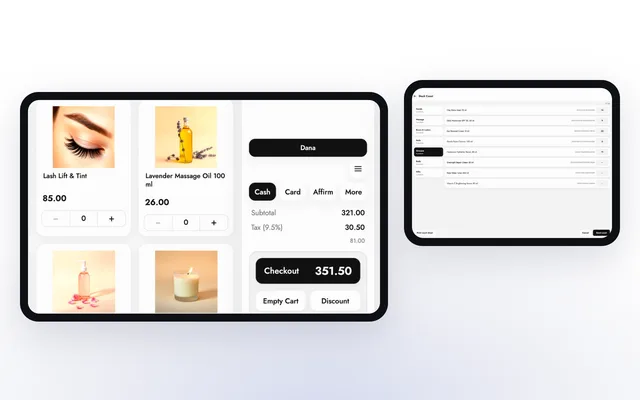
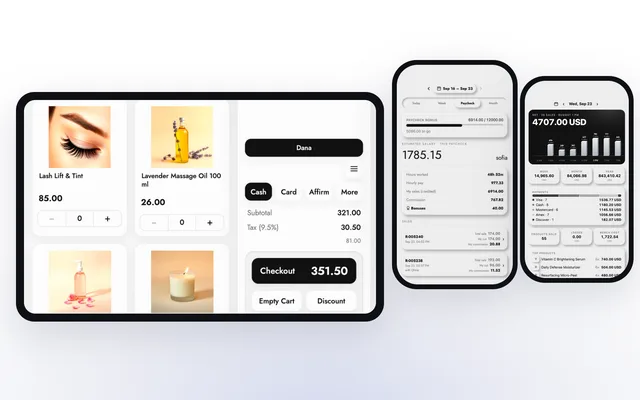
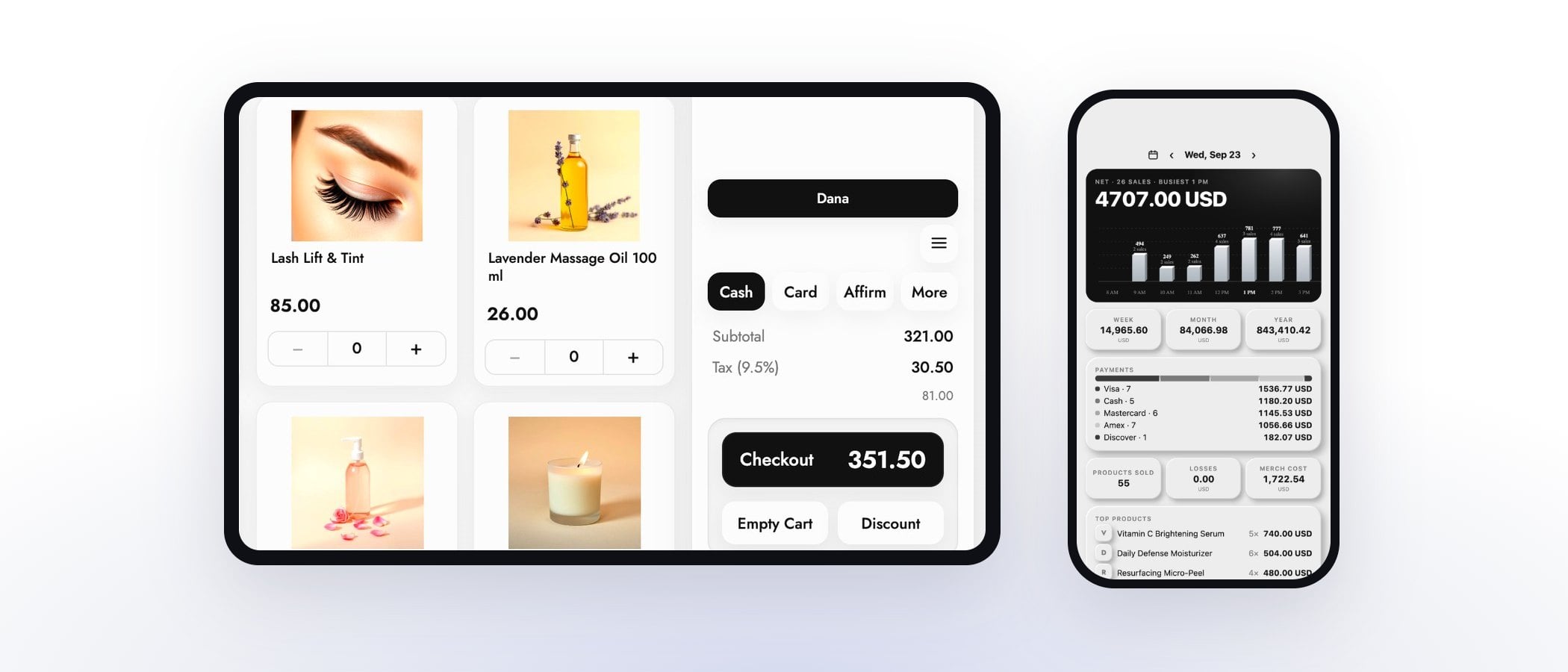
A policy is only as good as the register behind it. This is what happens in MazalPOS when a customer brings something back:
- Whole receipt or some lines. You can refund the whole receipt or only some of its lines, with the amount for each line, so a customer who bought three gifts and returns one gets exactly that back.
- Back on the shelf or not. For each item you choose whether it goes back into stock, which adds it to the count, or stays out because it was opened or damaged. The money goes back either way.
- A manager says yes. Every refund at the register needs a manager, full or partial and at any amount. The cashier signs the request with their own login, and a manager approves it on their phone or types their own PIN at the register. The system checks it again on the server.
- Commission follows the refund. If the sale earned a commission, it comes back off the seller in proportion to what was refunded, so nobody is paid on a sale that did not stay sold.
Every employee signs in with their own login, so you can always see who rang up and who asked for a refund. MazalPOS has no extra charge for each employee, which matters when you add holiday staff: it is priced per location at $99 or $169 a month, with 14 days free and no card. Your return policy, the window, the gift receipt rule and what you give back, stays your own rule, written on the sign. See pricing and MazalPOS for retail stores.
Is there a holiday return policy I can copy?
Yes, here is a holiday return policy you can copy. Change the dates and the words to fit your shop and your state, then print it. This is a template, not legal advice.
- Items bought from November 1 to December 24 can be returned until January 15.
- With a receipt: refund to the original payment, or an exchange.
- With a gift receipt: exchange or store credit for the value of the item.
- Items must be unused and in their original packaging.
- No returns on opened cosmetics, earrings, custom orders or clearance items.
- Gift cards cannot be returned for cash.
Gift cards are their own subject: federal rules say the money on a store gift card cannot expire sooner than five years after it was sold or last loaded, and the gift shop POS guide explains it. State laws differ, so check your own state's rules before you post a policy.
Common questions
Many stores follow a 30 or 90 day return deadline and stretch it for the holidays, with a set end date such as January 15. Pick one date, put it on the sign and apply it the same way to every customer.
Not always. The California Attorney General says that when a store clearly displays a limited or no-refund policy, refunds and exchanges are not required by law. Rules differ by state, so check yours.
A common rule is store credit or an exchange on a gift receipt, and a refund only to the buyer with the original receipt. The FTC says store credit costs a seller less and keeps the customer.
No. MazalPOS is priced per location, $99 or $169 a month, with no charge for each employee, 14 days free and no card.
Sources
- Federal Trade Commission, Consumer Advice: Solving Problems With a Business: Returns, Refunds, and Other Resolutions
- California Department of Justice, Office of the Attorney General: Refund Policies
- California Legislative Information: Civil Code section 1723
- National Retail Federation and Happy Returns: 2025 Retail Returns Landscape
- U.S. Consumer Financial Protection Bureau, Regulation E, 12 CFR 1005.20: Requirements for gift cards and gift certificates

Written by Mike Akop, founder of MazalPOS. We build and support the register, online store and staff app that stores from Las Vegas to Honolulu run on. Questions about this guide? Talk to a real person.